
Skin Treatments
SQT Bio-Microneedling Penrith
Microneedling without a device. Freshwater sponge spicules do the work instead of needles.
What Is SQT Bio-Microneedling?
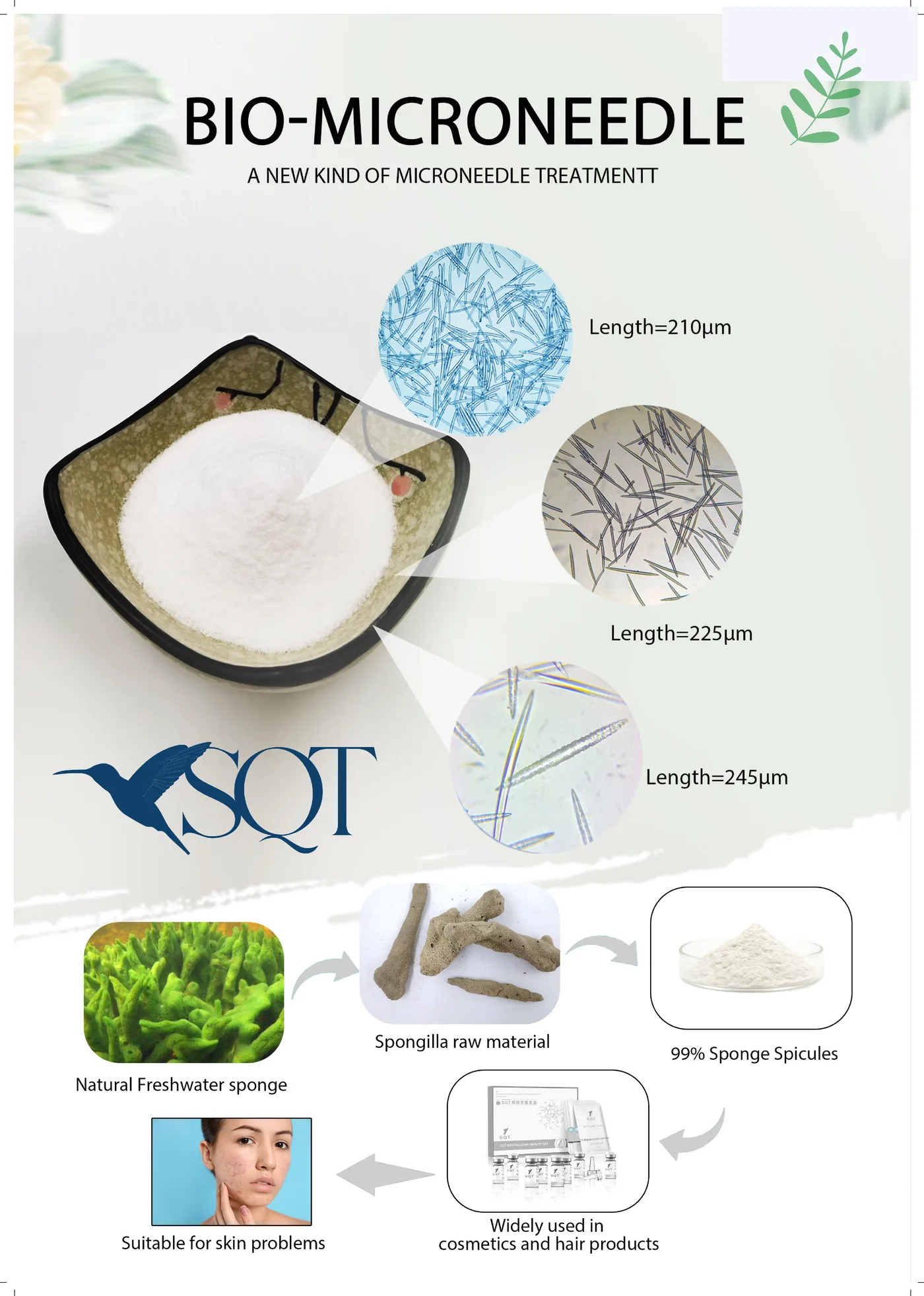
SQT bio-microneedling does the same job as conventional microneedling, but without a device. Instead of a motorised pen driving stainless steel needles into the skin, the treatment uses spongilla spicules. These are microscopic silica needles that grow naturally inside freshwater sponge, roughly 210 to 245 micrometres long, and they are milled into a fine powder.
Your clinician mixes that powder with a serum and works it into the skin by hand over about five minutes. The spicules seat themselves in the epidermis, where they keep stimulating the skin for up to 72 hours before they shed as the skin turns over. There is no numbing cream, because the spicules do not penetrate to the depth a needling pen reaches.
How It Works
The spicules create a very large number of shallow micro-channels across the treatment area. For scale, a home dermal roller creates around 30,000 channels in a session and a clinical needling pen creates somewhere between 90,000 and 200,000. SQT creates in the order of three to five million, though they sit shallower than the channels a pen makes. It is a different trade-off rather than a straight upgrade: more coverage, less depth.
What follows is a controlled repair response that runs over about a week:
- Spicule implantation. The spicules seat in the epidermis and keep stimulating the skin for up to 72 hours.
- Basal cell activation. Cells at the base of the epidermis are prompted to produce new skin cells, which push older cells toward the surface.
- Collagen response. The micro-injury starts a wound healing cascade, and the skin lays down new tissue.
- Epidermal repair. The surface renews. This is the phase where you see flaking and peeling.
- Metabolic renewal. Turnover continues for weeks afterwards, which is why texture and tone keep shifting after the peeling has finished.
Because the spicules stay active for up to 72 hours, the skin is more permeable than usual in the days straight after treatment. That is useful for getting active ingredients in, and it is also why the aftercare below matters more than it does for a gentler treatment.

SQT Compared With Conventional Microneedling
Both create micro-channels and both rely on the same repair response. Where they differ is depth, coverage, comfort and recovery. Figures for SQT come from the manufacturer.
| SQT bio-microneedling | Conventional microneedling | |
|---|---|---|
| What creates the channels | Spongilla spicules worked in by hand | Stainless steel needles in a motorised pen |
| Micro-channels per session | 3 to 5 million, shallow | 90,000 to 200,000, deeper |
| Depth reached | Epidermis | Adjustable, into the dermis |
| Numbing cream | Not used | Usually applied first |
| Application time | About 5 minutes | About 30 minutes, plus numbing |
| Visible recovery | Peeling and flaking, 4 to 7 days | Redness 24 to 48 hours, light flaking 2 to 5 days |
| Over active acne | Can generally be used | Generally avoided |
| Typically used for | Congestion, pigmentation, surface texture | Scarring, fine lines, firmness |
Both treatments break or disrupt the skin barrier and both carry a risk of infection, irritation and pigmentation change. Both carry real risk, and anyone telling you otherwise is selling something. Recovery figures are typical and vary between people.
What It May Help Address
- Congestion, blackheads and enlarged pores
- Pigmentation and sun spots
- Rough or uneven texture
- Fine lines and loss of firmness
- Active acne and acne scarring
- Scarring and stretch marks
One of the practical differences with SQT is that it can be used on skin with active breakouts, where a needling pen usually cannot. That does not make it the automatic answer for acne. Inflamed, cystic acne often needs medical management first, and your clinician will say so if that is what your skin needs.
What to Expect
Your skin is cleansed, then the spicule powder is worked in by hand. You will feel a prickling that builds into heat over the five minutes or so of application. Most people describe it as strange rather than painful, but it is not a relaxing facial and we would rather you knew that before you were on the bed.
For the first day or two the skin feels tight, warm and itchy, and looks flushed. From roughly day three the peeling starts, and it runs for about four to seven days depending on your skin. It is proper flaking, not a subtle glow, and it is very visible. Plan it around your calendar rather than the week of a wedding.
Most people are through the peeling by the end of the first week and see texture and tone continue to settle over the following month. A course of treatments spaced four to six weeks apart is common for pigmentation or scarring, but that is a conversation to have after your clinician has looked at your skin, not a package to buy up front.
Risks and Complications
SQT bio-microneedling is a skin-injuring treatment and it carries real risks. The common ones are redness, itching, tingling, dryness, tightness, flaking and peeling for several days, and a temporary flare of breakouts as congestion clears.
Less common but possible: prolonged irritation, contact dermatitis, an allergic reaction to the spicules, cold sore reactivation if you are prone to them, and pigmentation changes. Post-inflammatory hyperpigmentation is the one to take seriously if you have a deeper skin tone, because it can last months. Scarring is rare but is on the list.
Picking or exfoliating during the peeling phase is the single most common way a straightforward recovery turns into a problem. Read our full risks and complications page before booking, and raise anything on it with your clinician at consultation.
Aftercare
- Leave the skin alone. No picking, peeling or exfoliating while it is flaking
- Cleanse gently with lukewarm water and a bland cleanser
- Moisturise often, more than feels necessary
- SPF 50+ every day, and stay out of direct sun while the skin is renewing
- No make-up for 24 hours
- No heat, sweat, saunas, swimming or vigorous exercise for 48 hours
- Hold off retinoids, acids and scrubs until the peeling has fully finished
- Call us if the skin becomes painful, swollen, weeping or unusually hot
Full instructions are on our skin treatment aftercare page.
Before and After
The images below were supplied by SQT Bio-Microneedling Australia and were photographed at other clinics using the same treatment. They are not BLAAH patients. Individual results vary, and how your skin responds depends on your skin type, your concern, how many sessions you have and what you do at home in between.
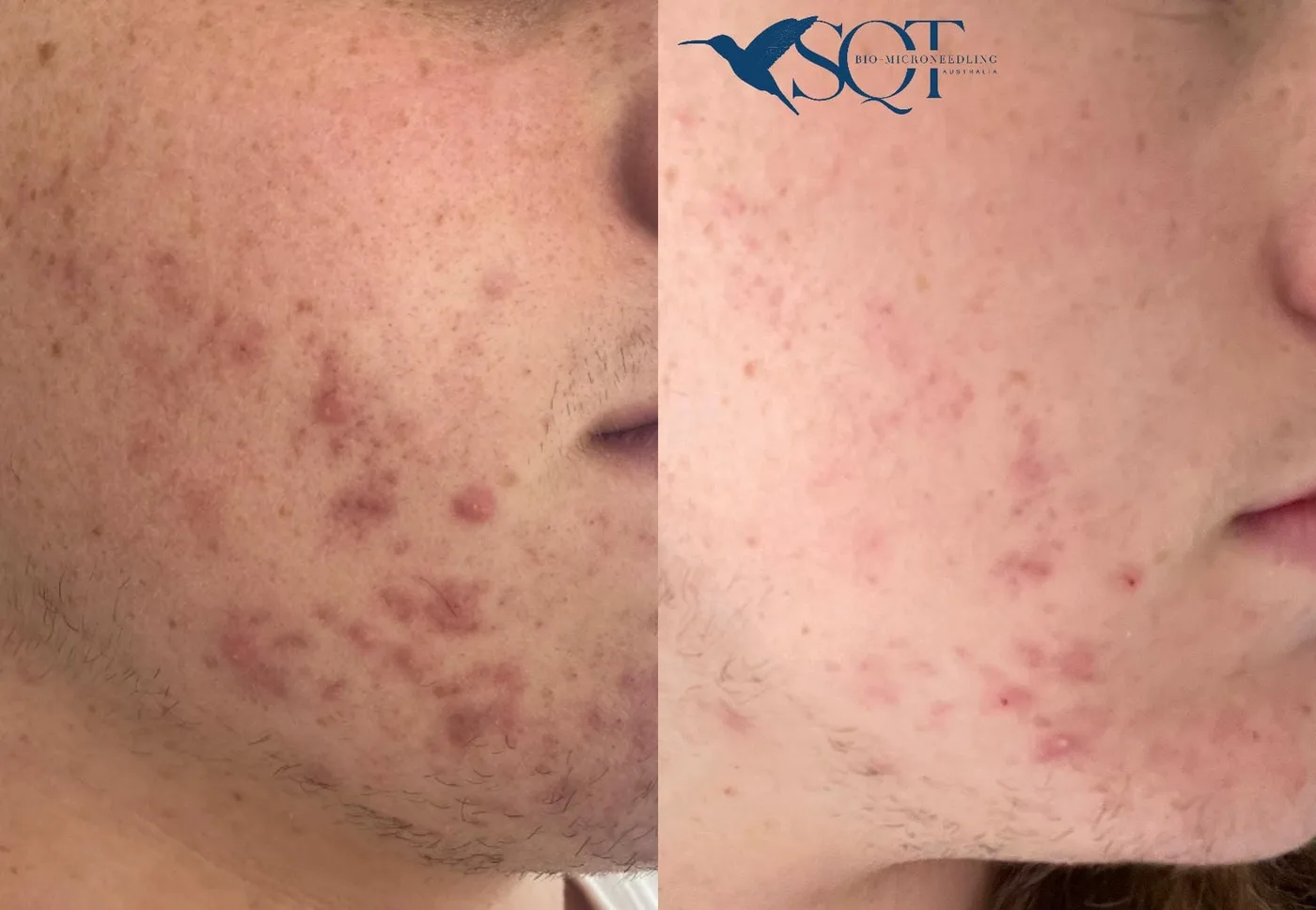
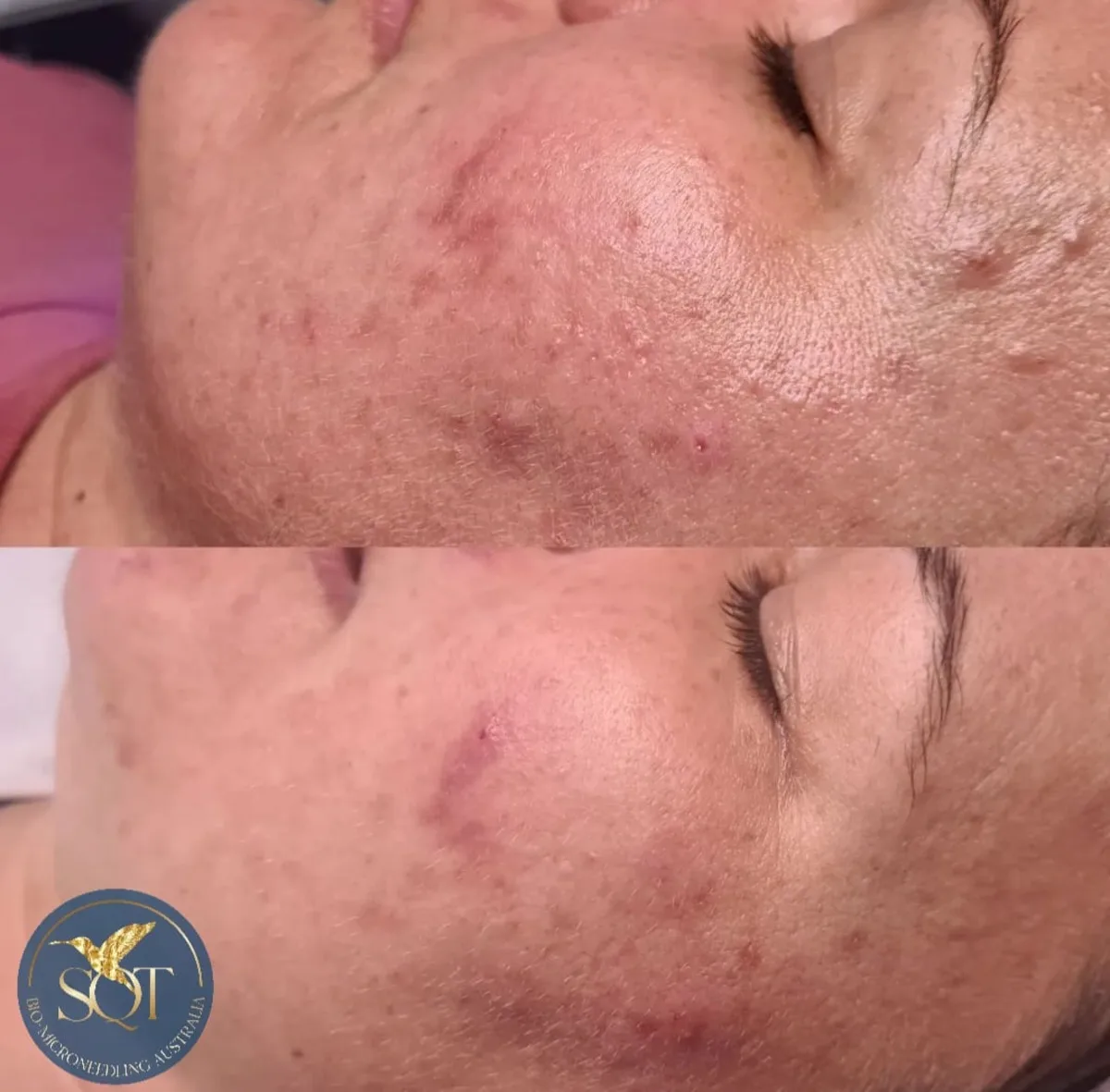
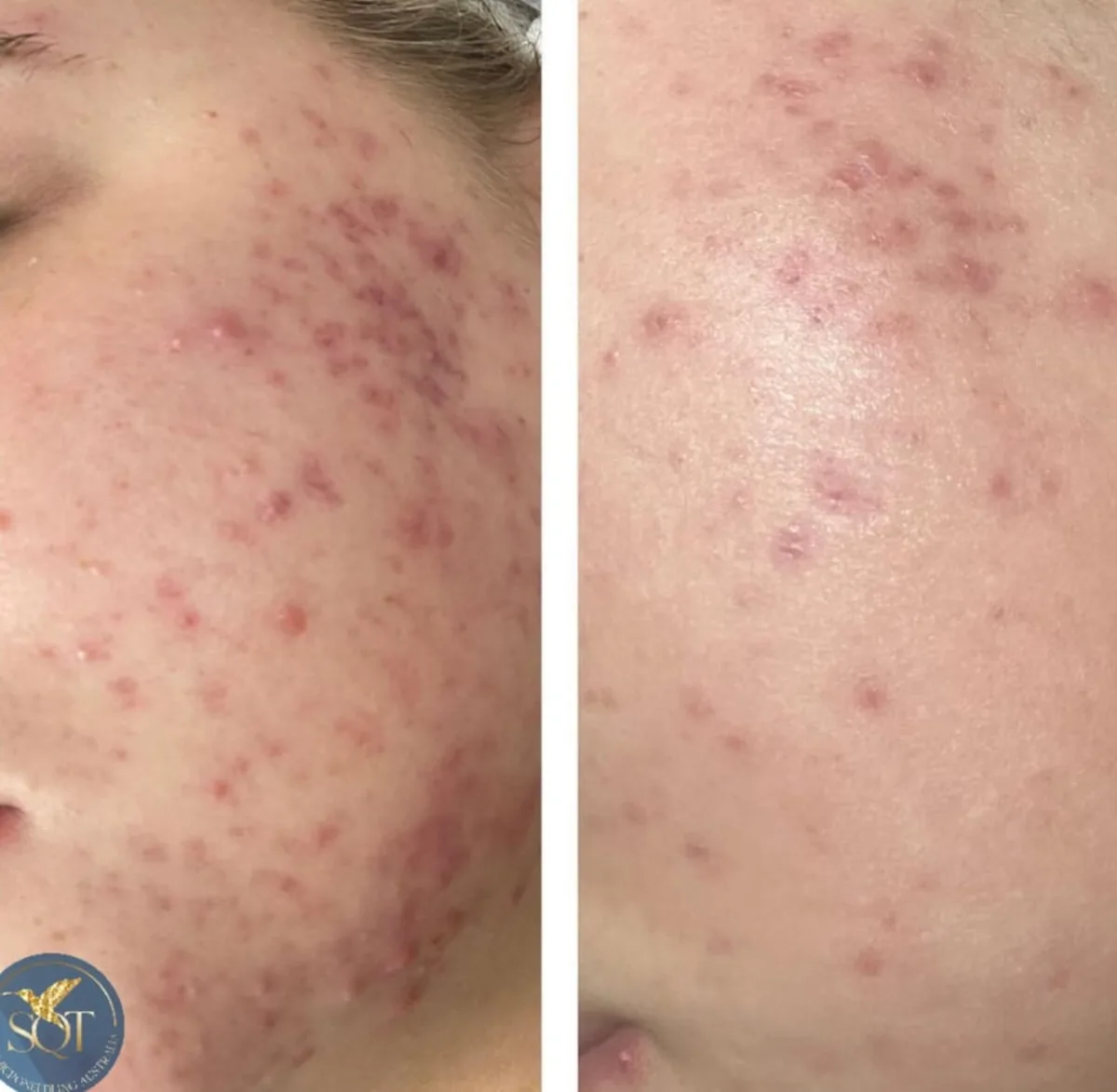
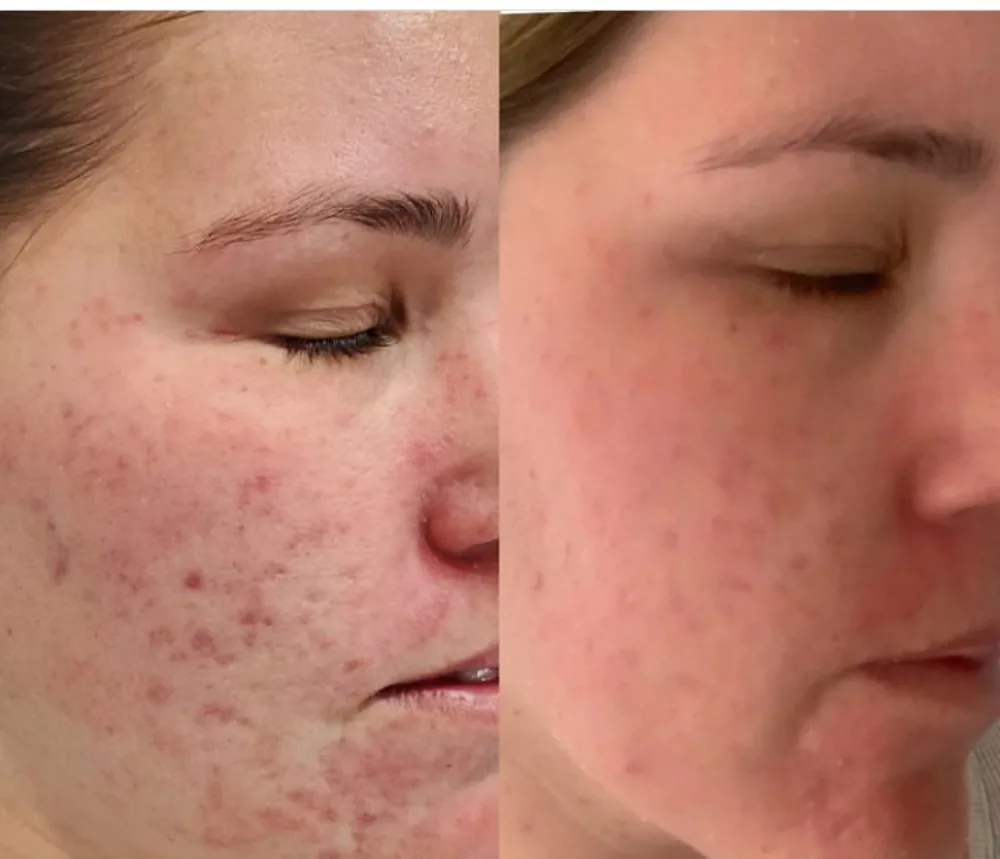
Results may vary. These photographs are unedited and show the same person before and after a course of SQT bio-microneedling. They are supplied by the treatment manufacturer and are shown to illustrate the type of concern the treatment is used for, not to predict your own outcome.
Who Is It For?
SQT suits people who want a needling-style treatment without a device, and who can give the skin a week to peel. It is often a better fit than dermal stamping if you have active breakouts, and a worse fit if you cannot have visible flaking. If you want collagen support with less downtime, Dermapen 4 is usually the better conversation. Which one we recommend depends on your skin, not on what we would rather sell.
Frequently Asked Questions
How much downtime is there really?
Tingling, heat and redness for the first 24 to 48 hours, then visible flaking and peeling for about four to seven days. It is obvious to other people. If you have something on in the next fortnight, book it for afterwards.
Does it hurt?
There is no numbing cream because the spicules do not go as deep as a needling pen. You will feel prickling that builds into heat during the five minutes of application, and itching for a day or two afterwards. Most people find it tolerable. Some find the itching harder than the treatment itself.
How is it different from microneedling with a device?
A device drives needles to a set depth, usually with numbing cream, and can reach the dermis. SQT works shallower but across far more of the skin surface, and it can be used on active acne where a device generally cannot. Downtime is longer with SQT because of the peeling phase. Neither is better in the abstract. They address different things.
How many sessions will I need?
That depends entirely on your skin and what you are treating. Pigmentation and scarring usually need a course spaced four to six weeks apart. Your clinician will give you a recommendation after looking at your skin. We do not sell packages up front, and you can take the recommendation away and decide in your own time.
How long does the appointment take?
Allow about 45 minutes. The spicule application itself is roughly five minutes of that. The rest is cleansing, a calming mask afterwards, and time to talk through what your skin is going to do over the next week.
When will I notice a change?
The peeling finishes around day five to seven and the skin underneath looks and feels different straight away. Texture and tone keep settling for several weeks after that as turnover continues. If you are treating pigmentation or scarring, judge it after a course rather than after one session.
Does it help with acne scarring?
It can help with surface texture and post-inflammatory marks. Deeper, indented scarring generally needs a treatment that reaches further into the dermis, which is where Dermapen 4 and its scar setting come in. Often the answer is both, sequenced. Your clinician will tell you honestly if SQT alone is unlikely to shift what is bothering you.
Can I have it if I am pregnant or breastfeeding?
Raise it at consultation. We assess pregnancy and breastfeeding case by case and will tell you plainly if we think it is worth waiting.
- #Acne
- #BioMicroneedling
- #SkinRemodelling
- #SkinRenewal
- #SkinResurfacing
- #SpiculeTreatment
- #SQT
- #SQTBioMicroneedling
- #Penrith
- #PenrithAesthetics
- #PenrithBeauty
- #PenrithSkin
- #WesternSydney
- #WesternSydneyBeauty
- #WesternSydneySkin
Interested in sqt bio-microneedling penrith? Book a consultation to discuss whether this treatment is right for you.
All cosmetic procedures carry risks. Read about risks and complications before you book.
Book a Consultation